
Small Barbs Care Guide: Cherry, Odessa, Checkered, Redside and Melon Barbs
Barbs have a bit of a reputation as fin nippers, thanks mostly to tiger barbs. But many of the smaller barbs are peaceful, colourful schooling fish that suit a planted community tank perfectly. They are hardy, easy to feed, and the males colour up beautifully when they display to each other. This guide covers the barbs I keep, how to set up for them and how to breed them.
Why keep small barbs?
- Colour: Male barbs turn deep red, copper or orange when they are settled and in breeding condition.
- Activity: They are busy, confident fish that use the whole tank, so there is always something to watch.
- Hardiness: Most small barbs are very forgiving and a great step up from beginner fish.
- Easy breeding: They are egg scatterers that will spawn readily in a planted tank.
Barb species
Here are the barbs I have in the shop, from the smallest and gentlest to the larger and more active. Stock comes and goes, so if one is sold out you can sign up on its product page to hear when it is back.
Cherry barbs
Longfin cherry barb (Puntius titteya)

Cherry barbs are one of the most peaceful barbs you can keep, and the longfin form adds long, flowing fins. Males turn a deep, rich red when they display. They grow to about 4 to 5cm. Because of their fins, keep them away from nippy tankmates. Shop longfin cherry barbs
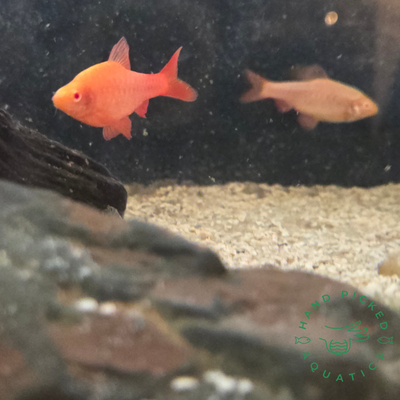
Albino cherry barb

The albino form of the cherry barb, with a pale golden-pink body and red eyes. Males develop a deeper reddish tone in breeding condition. Just as hardy and peaceful as the standard cherry barb. Shop albino cherry barbs
Other small barbs
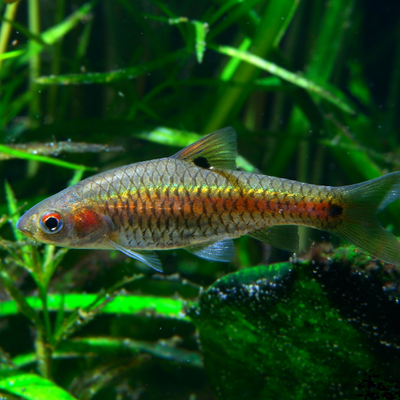
Checkered barb (Oliotius oligolepis)

Dark-edged scales give them a checkerboard pattern, and males develop a coppery sheen and dark fin edges when they display. They grow to about 5cm and like slightly cooler water than most barbs, from 20 to 25 degrees. Shop checkered barbs
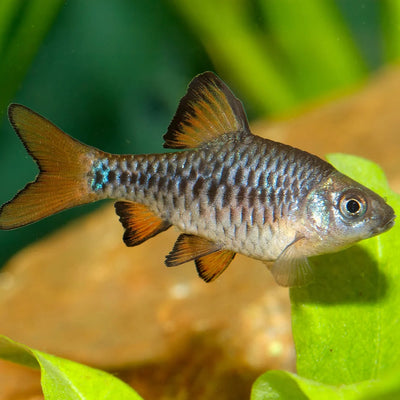
Odessa barb (Pethia padamya)

One of the most colourful barbs in the hobby. Males develop a bright red stripe along the body and compete to show it off. Active and confident, they grow to about 5 to 6cm and do best in a tank of 80 litres or more. Shop Odessa barbs
Redside barb (Puntius bimaculatus)

A warm reddish-orange flush along the sides that gets stronger as they mature. They are less commonly seen than cherry barbs, peaceful enough for a community tank, and grow to about 6 to 7cm. Shop redside barbs
Melon barb (Haludaria fasciata)

Also called the panda barb. A lively schooling barb from southern India with a pinkish body and bold black bars, with orange and red coming through as they mature. They are the most active barb on this list, so give them at least 100 litres and active tankmates rather than slow fish with long fins. Shop melon barbs
Tank setup
- Tank size: 40 litres or more for cherry barbs, 60 litres for checkered barbs, 80 litres for Odessa, and 100 litres for melon barbs and redside barbs.
- Group size: At least 6, or 8 for melon barbs. Barbs are schooling fish, and a good-sized group spreads out any squabbling and brings out the best colour.
- Temperature: 22 to 26 degrees Celsius suits most of them. Checkered barbs are happy a little cooler.
- Plants: A planted tank with open swimming space works best. Fine-leaved plants and java moss also give them somewhere to spawn.
- Substrate: A dark substrate makes their colours stand out much more.
- Filtration: Gentle to moderate flow. A sponge filter works well and is safe for fry.
Feeding
Barbs are omnivores and not fussy at all. A good flake or small pellet makes a great staple. Live and frozen food like daphnia and baby brine shrimp bring out their colour and get them into breeding condition. Feed small amounts once or twice a day.
Breeding barbs
Small barbs are egg scatterers. A well-fed group in a planted tank will often spawn in the morning, with the males chasing the females through fine plants and moss. The adults do not look after the eggs and will happily eat them.
To raise fry, give them a thick clump of moss or a spawning mop, then move it to a separate container once you see eggs. The eggs hatch in a day or two, and the fry are very small. Start them on paramecium or vinegar eels, then move on to microworms and baby brine shrimp as they grow.
Tankmates
Cherry, checkered, redside and Odessa barbs are peaceful and mix well with most community fish of a similar size, such as rasboras, danios, corydoras and bristlenose plecos. Melon barbs are more boisterous, so keep them with other active fish.
Avoid keeping barbs with slow fish that have long fins, and do not keep very small fish or baby shrimp with the larger barbs, as they may be eaten.
Why I keep barbs
Barbs are some of the most underrated fish in the hobby. A group of male cherry or Odessa barbs showing off their red against green plants is one of the best sights in a community tank, and they are about as easy to keep as fish get.
If you have any questions about barbs, email me at elyza@handpickedaquatics.com. Happy to help.
Cheers,
Elyza
Hand Picked Aquatics